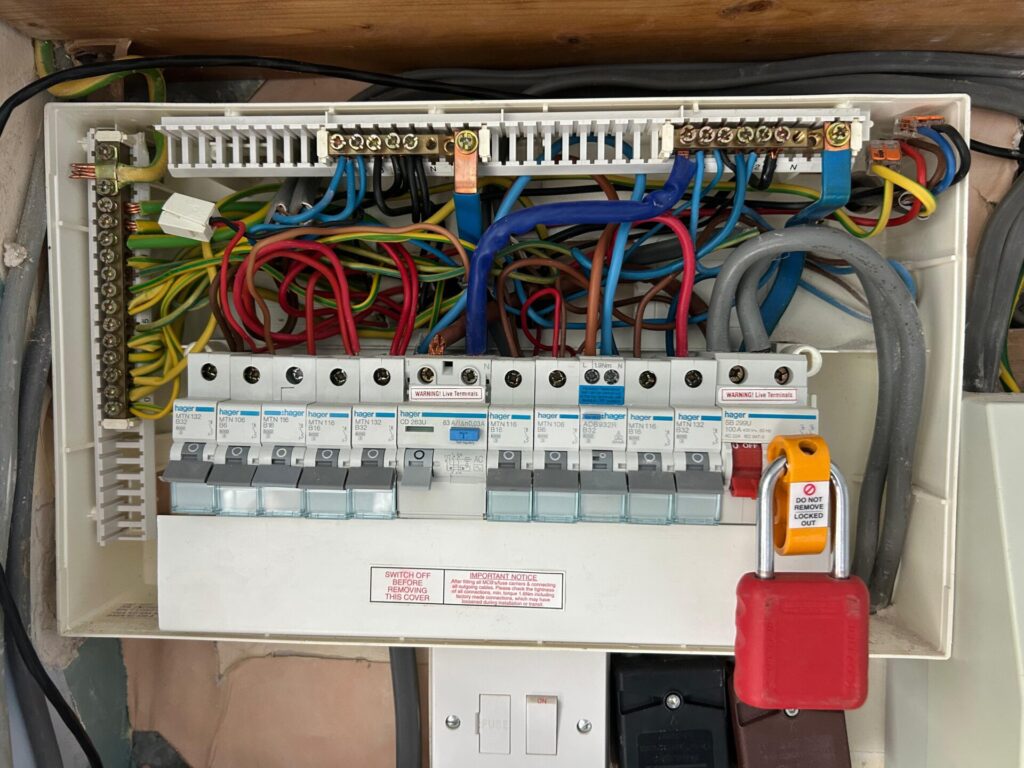


Electrical Installation Condition Reports, more commonly referred to as EICR reports, are one of the most important safety inspections carried out on electrical systems within homes, rental properties, commercial buildings and industrial premises throughout the UK. An EICR is designed to assess the overall condition, safety and integrity of an electrical installation and identify whether any part of the system has deteriorated, become damaged, overloaded or fallen below current safety standards.
Over time, electrical systems naturally age. Wiring insulation can degrade, electrical accessories can become worn, consumer units can become outdated and previous alterations or repairs may not meet modern regulations. Many electrical faults are hidden behind walls, ceilings, sockets and distribution boards, meaning problems often go unnoticed until they become dangerous. Electrical Installation Condition Reports are intended to identify these risks before they result in electric shocks, fires, equipment failure or serious injury.
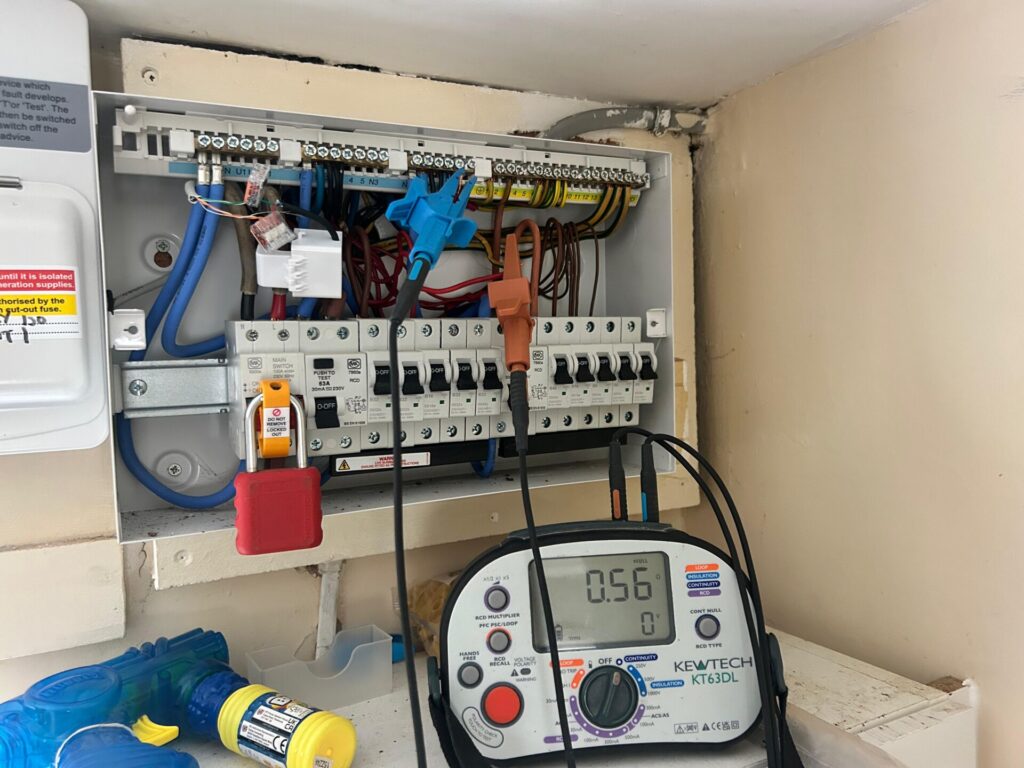
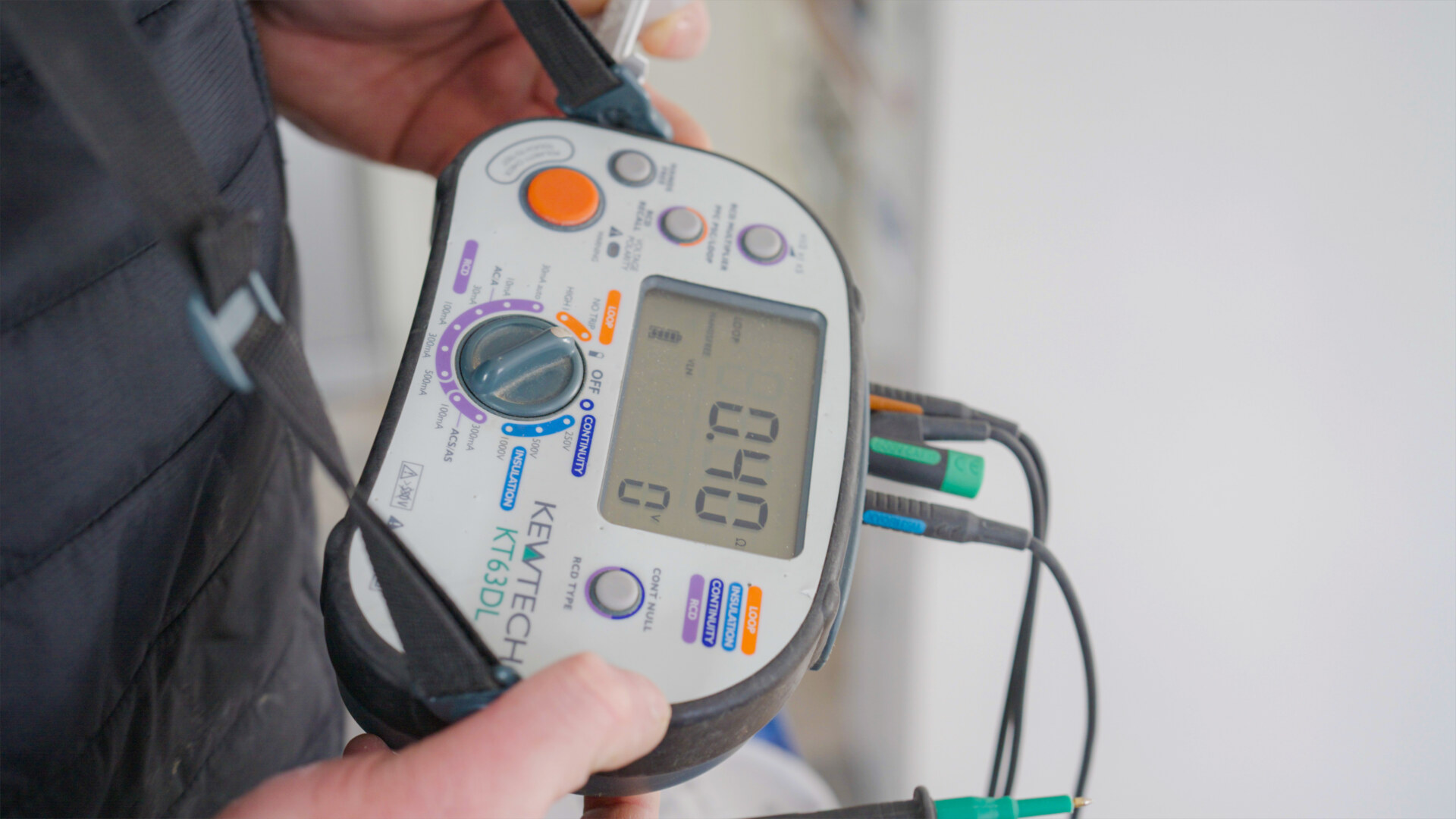
An EICR is carried out by a qualified electrician who thoroughly inspects and tests the fixed electrical installation within a property. This includes wiring circuits, consumer units, fuse boards, earthing arrangements, sockets, switches, lighting circuits and protective devices. The inspection involves both visual assessments and detailed electrical testing using specialist equipment to measure resistance, continuity, polarity, insulation integrity and fault protection.
The purpose of an Electrical Installation Condition Report is not simply to issue a certificate. The inspection provides a detailed overview of the health of an electrical system and determines whether it is considered safe for continued use. During the assessment, the electrician will identify any defects, potential hazards or areas of non-compliance with the current edition of the UK Wiring Regulations, known as BS 7671.
Once the inspection has been completed, the findings are documented within the EICR report itself. Any issues discovered during testing are categorised according to their severity. A Code C1 observation indicates immediate danger and requires urgent action. A Code C2 observation highlights a potentially dangerous issue that should be addressed as soon as possible. A Code C3 recommendation identifies areas where improvements are advised, although the installation may still be considered satisfactory overall. An FI code means further investigation is required because a potentially dangerous issue could not be fully assessed during the inspection.
Many older properties throughout the UK still contain outdated electrical systems that may have been installed decades ago. It is not uncommon to find ageing rubber cabling, old-style fuse boards, inadequate earthing systems or circuits that have been altered over time by multiple contractors. In some cases, properties may still contain wiring that predates modern electrical safety regulations entirely. An EICR helps uncover these issues and provides property owners with a clear understanding of whether their installation remains safe and fit for purpose.
EICR certificates in east devon
Electrical Installation Condition Reports are especially important within rented accommodation. UK legislation now requires landlords in England to ensure that electrical installations are inspected and tested at least every five years by a qualified electrician. Landlords must provide tenants with a copy of the report and complete any remedial work identified within the required timescales. Failure to comply with these regulations can result in enforcement action, financial penalties and increased liability should an electrical incident occur within the property.
For homeowners, EICR reports provide reassurance that the electrical system within the property is operating safely. Many homeowners assume that if lights and sockets are functioning correctly then the installation must be safe, but this is not always the case. Dangerous faults can exist within hidden wiring, overloaded circuits or defective protective devices without any visible warning signs. Periodic electrical inspections allow these issues to be identified before they escalate into larger and potentially more expensive problems.
Commercial premises also rely heavily on Electrical Installation Condition Reports to maintain safety and legal compliance. Offices, retail units, workshops, warehouses and industrial facilities often place significant demands on their electrical systems due to machinery, computers, heating equipment, lighting systems and high energy consumption. Overloaded circuits, damaged cabling and inadequate protection can create serious risks in busy working environments. Regular EICR inspections help businesses protect staff, customers, equipment and premises while demonstrating compliance with workplace health and safety responsibilities.
Industrial environments in particular can place enormous strain on electrical installations. Manufacturing machinery, automated systems, welding equipment, extraction systems and heavy-duty electrical infrastructure are often subjected to vibration, heat, moisture and continuous operation. Over time this can accelerate wear and deterioration. Electrical Installation Condition Reports within industrial settings are therefore essential for maintaining operational safety, minimising downtime and reducing the risk of electrical failure disrupting production.
EICR for property purchases and sales
An EICR can also be extremely valuable during property purchases and sales. Buyers increasingly request electrical inspections before proceeding with a property transaction, particularly with older homes. An Electrical Installation Condition Report provides transparency regarding the condition of the electrical installation and can help identify costly remedial work that may otherwise remain hidden until after completion. Sellers may also choose to commission an EICR to provide confidence to prospective buyers and demonstrate that the property has been properly maintained.
The process of carrying out an Electrical Installation Condition Report involves isolating circuits and performing live and dead testing procedures. Depending on the size and complexity of the property, inspections can take several hours or, in larger commercial or industrial sites, significantly longer. The electrician will assess whether protective devices operate correctly under fault conditions, confirm the adequacy of earthing and bonding arrangements and ensure that circuits are correctly identified and protected.
One of the most important aspects of an EICR is identifying fire risks caused by electrical faults. Electrical fires remain a major cause of property damage throughout the UK, with many incidents linked to overloaded circuits, loose connections, deteriorated wiring or outdated consumer units lacking modern safety protection. The introduction of RCD protection and improved circuit protection technologies has significantly improved electrical safety standards over recent years, but many older installations still lack these protections. An EICR highlights these deficiencies and recommends improvements where necessary.
EICR certificates in Honiton Devon
Modern electrical installations are expected to meet far higher safety standards than systems installed several decades ago. Regulations have evolved continually to improve protection against electric shock, fire hazards and equipment damage. As a result, even installations that were technically compliant when first installed may no longer align with current best practices. An EICR helps determine whether older systems remain reasonably safe or whether upgrades are advisable to improve overall protection.
Electrical Installation Condition Reports also play an important role in insurance and liability considerations. In the event of an electrical fire or accident, insurers may investigate whether the electrical installation had been properly maintained and inspected. Failure to carry out appropriate inspections could potentially complicate claims or increase liability exposure for property owners, landlords or businesses. Maintaining up-to-date electrical inspection records demonstrates a proactive approach to safety and maintenance.
Another important benefit of EICR inspections is preventative maintenance. Identifying worn components, loose connections or overloaded circuits early can often prevent much larger failures later on. Minor issues that are relatively inexpensive to repair today could otherwise develop into major electrical faults requiring extensive remedial work in the future. Preventative electrical inspections can therefore save property owners significant costs over time while improving safety and reliability.
Many people misunderstand the purpose of an Electrical Installation Condition Report and assume it is similar to a PAT test. In reality, the two inspections are very different. PAT testing focuses on portable appliances such as kettles, computers or extension leads, whereas an EICR examines the fixed electrical installation itself, including the wiring and infrastructure supplying power throughout the building.
The frequency of EICR inspections varies depending on the type of property and its usage. Rental properties generally require inspections every five years, while homeowners are often advised to consider inspections approximately every ten years or when purchasing a property. Commercial and industrial premises may require more frequent inspections depending on the environment, electrical load and operational risks involved.
Ultimately, Electrical Installation Condition Reports provide an essential snapshot of the safety and condition of an electrical installation. They help identify hidden risks, ensure compliance with current regulations and provide reassurance that electrical systems are operating safely and efficiently. Whether for a domestic property, rental accommodation, commercial premises or industrial facility, an EICR is one of the most important preventative safety measures that property owners can undertake to protect both people and buildings from potentially serious electrical hazards.
EICR Fault Codes
One of the most important parts of an Electrical Installation Condition Report is the coding system used by the electrician to classify any faults, defects or safety concerns discovered during the inspection. These EICR codes are designed to clearly communicate the severity of an issue and determine whether remedial work is required immediately, recommended for future improvement or requires further investigation. Understanding these codes is essential for homeowners, landlords, business owners and property managers because the outcome of an EICR can directly affect legal compliance, insurance considerations and the overall safety of a property.
eicr fault codes electrical safety reports
When an electrician carries out an EICR inspection, every observation recorded within the report is assigned a classification code. These codes provide a standardised way of identifying the seriousness of defects found within the electrical installation. The coding system helps ensure consistency across the electrical industry and allows property owners to quickly understand whether their installation is considered satisfactory or unsatisfactory.
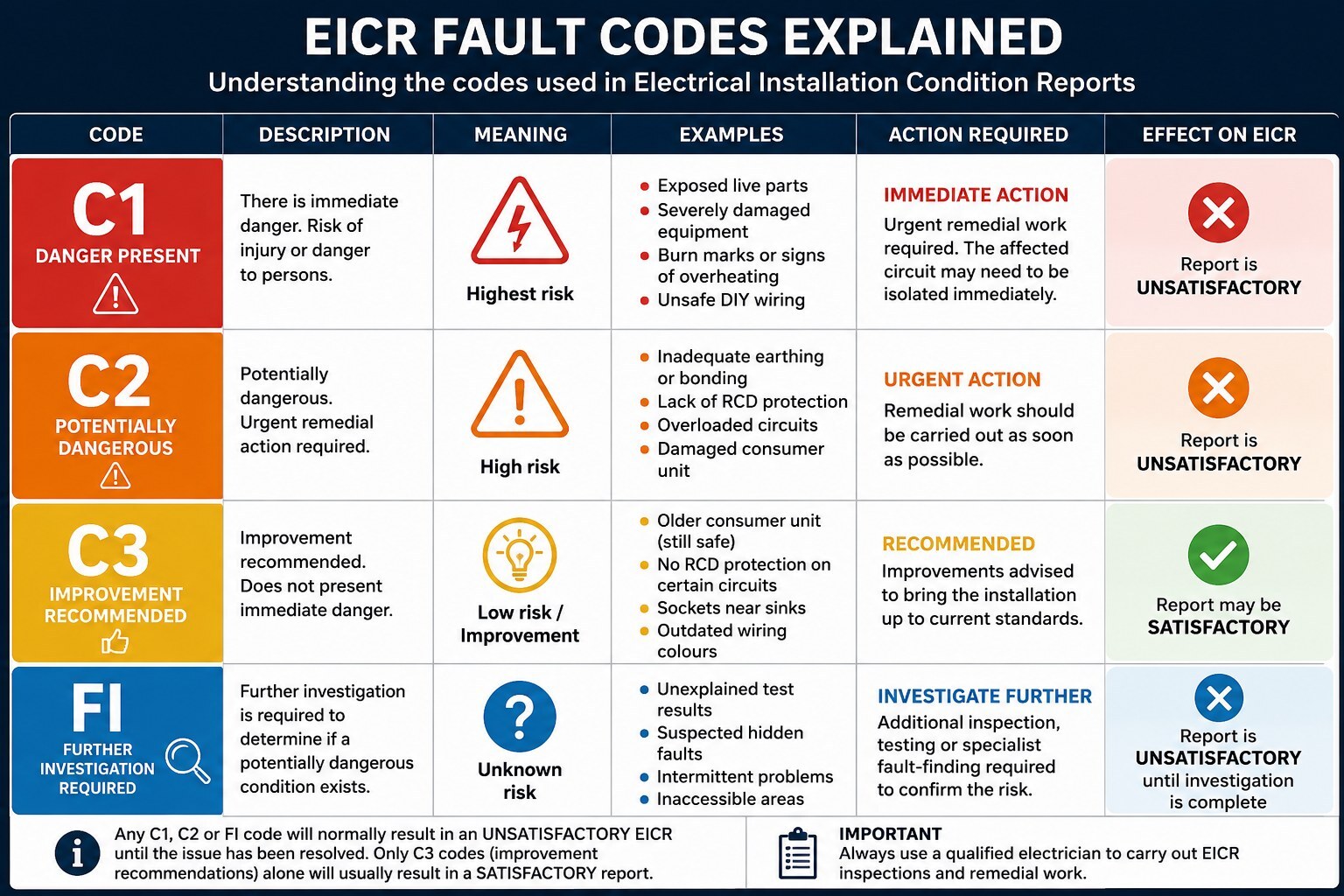
The most serious EICR code is the C1 classification. A C1 code means “Danger Present” and indicates that there is an immediate risk of injury or danger to occupants within the property. Where a C1 observation is identified, urgent action is required straight away to make the installation safe. In many cases, the inspecting electrician may isolate the affected circuit or equipment immediately to remove the danger.
Examples of C1 faults can include exposed live wiring, severely damaged sockets, missing covers exposing live electrical parts, signs of overheating that present an active fire risk or unsafe DIY electrical modifications that leave conductors accessible. These are situations where someone could realistically receive an electric shock or where a fire could occur at any time. A property containing one or more C1 observations will automatically receive an unsatisfactory EICR result until remedial work has been completed.
The next classification is the C2 code, which stands for “Potentially Dangerous.” A C2 observation means that while immediate danger may not currently exist, there is a significant safety concern that could become dangerous under certain conditions. C2 faults still require urgent remedial action and also result in the overall EICR being marked as unsatisfactory.
Common examples of C2 observations include inadequate earthing or bonding arrangements, lack of RCD protection on circuits where modern regulations require it, damaged consumer units, incorrectly wired accessories, overloaded circuits or electrical equipment showing signs of deterioration. These issues may not present immediate danger in normal operation, but if a fault were to occur, the risk of electric shock or fire could become significant.
Many property owners are surprised to discover that older fuse boards frequently generate C2 observations during EICR inspections. Consumer units installed decades ago may still technically function, but they often lack modern protective devices such as RCDs or RCBOs that are now considered essential for improved electrical safety. While an older fuse board may continue operating, its inability to provide modern fault protection can lead to an unsatisfactory EICR result.
Another classification commonly seen within Electrical Installation Condition Reports is the C3 code. C3 stands for “Improvement Recommended.” Unlike C1 and C2 observations, a C3 code does not automatically make the installation unsatisfactory. Instead, it highlights areas where the electrical installation could be improved to better align with current regulations or modern safety standards.
A property can still achieve a satisfactory EICR result even if multiple C3 observations are present. These recommendations are intended to improve the overall standard of the installation rather than identify immediate or potentially dangerous faults. Examples of C3 observations may include older consumer units that remain safe but lack modern enhancements, wiring colours from previous regulation eras, sockets positioned close to sinks without additional protection or lighting circuits without RCD protection where no immediate risk currently exists.
The presence of C3 recommendations does not necessarily mean the installation is unsafe. In many older properties throughout the UK, it is extremely common for electrical systems to contain some elements that do not fully meet current regulations despite remaining functional and reasonably safe. The EICR process acknowledges this distinction by separating genuine safety concerns from general improvement recommendations.
EICR certificates in Honiton Devon
Another important classification within an EICR is the FI code, meaning “Further Investigation Required.” An FI observation is used when the electrician identifies something that could potentially indicate a dangerous condition, but where the issue cannot be fully confirmed during the inspection itself. Further investigation is therefore necessary before a final assessment can be made.
An FI code does not automatically mean the installation is dangerous, but it does indicate uncertainty regarding safety. Further diagnostic work may be required to locate hidden faults, inspect inaccessible areas or investigate irregular test results. Depending on the nature of the issue, an FI observation may still result in an unsatisfactory EICR until the investigation has been completed and the cause properly identified.
Examples of situations that may generate an FI code include unexplained circuit test failures, suspected hidden junction box issues, signs of possible overheating behind walls or intermittent faults that require more invasive inspection procedures. In some cases, the electrician may recommend specialist fault-finding work to properly assess the condition of the installation.
The distinction between these EICR codes is extremely important because they directly affect whether a report is classified as satisfactory or unsatisfactory. Any presence of C1, C2 or FI observations will generally result in an unsatisfactory EICR outcome until appropriate remedial action or further investigation has been completed. Only installations containing C3 recommendations alone are normally considered satisfactory.
For landlords, understanding EICR codes is particularly important due to legal obligations surrounding rental properties. Where an EICR identifies C1 or C2 observations, remedial work must usually be completed within specified timeframes to comply with electrical safety regulations. Failure to address dangerous electrical defects can expose landlords to enforcement action, fines and significant liability should an incident occur within the property.
Commercial and industrial properties also rely heavily on accurate EICR coding to prioritise electrical maintenance and safety improvements. Larger premises may contain extensive electrical infrastructure across multiple circuits, distribution boards and machinery installations. The coding system allows businesses to identify which issues require urgent intervention and which can be scheduled as part of longer-term maintenance planning.
It is important to understand that EICR coding is ultimately based on the professional judgement of the inspecting electrician. Different electricians may occasionally vary slightly in how they interpret borderline observations, particularly regarding older installations that predate current regulations. However, experienced and competent electricians follow industry guidance designed to maintain consistency and fairness when assigning classifications.
Many homeowners become concerned when they first see multiple observations listed within an EICR report, but not every observation indicates serious danger. Electrical systems naturally evolve over time as regulations improve, and older properties frequently contain installations that differ from modern standards without necessarily being unsafe. The coding structure is intended to distinguish between critical safety issues and general modernisation recommendations.
Understanding EICR error codes allows property owners to make informed decisions regarding electrical safety, maintenance and future upgrades. Whether addressing urgent hazards, improving older systems or planning preventative maintenance, the classification system provides a clear framework for prioritising electrical work and ensuring installations remain safe, compliant and reliable for continued use.
EICR in Honiton with Electra Compliance
When it comes to Electrical Installation Condition Reports in Honiton, Electra Compliance provides professional electrical inspection and testing services for domestic, commercial and industrial properties throughout Honiton and the wider Devon area. Whether you are a homeowner looking for reassurance, a landlord needing to meet legal obligations or a business wanting to maintain electrical safety compliance, regular EICR inspections are an essential part of protecting both people and property.
Electrical systems naturally deteriorate over time, particularly within older properties where wiring, fuse boards and protective devices may no longer meet modern safety expectations. Electra Compliance carries out detailed EICR inspections designed to identify hidden faults, overloaded circuits, inadequate earthing, damaged accessories and outdated electrical infrastructure before they develop into dangerous or costly problems.
For landlords throughout Honiton, Electrical Installation Condition Reports are now a legal requirement within rental properties. Electra Compliance helps landlords remain compliant with current regulations by carrying out professional inspections and producing detailed reports outlining the overall condition of the electrical installation. Where remedial work is required, faults are clearly categorised using recognised EICR coding standards so that property owners fully understand the severity of any issues identified.
Commercial and industrial premises throughout Honiton also rely heavily on safe and properly maintained electrical systems. From offices and retail units through to workshops, agricultural buildings and industrial facilities, electrical infrastructure often operates under significant demand every day. Electra Compliance works with businesses throughout the area to carry out thorough inspections that help maintain compliance, improve safety and reduce the risk of electrical faults disrupting operations.
Every EICR carried out by Electra Compliance involves a detailed inspection and testing process designed to assess the overall integrity and safety of the fixed electrical installation. This includes inspecting consumer units, circuit protection, wiring systems, sockets, switches, lighting circuits and earthing arrangements while carrying out electrical testing to identify hidden faults that may not be visible during a standard visual inspection alone.
One of the key benefits of arranging an EICR with Electra Compliance is gaining clear, honest and understandable feedback regarding the condition of the installation. Many property owners are unfamiliar with technical electrical terminology or EICR fault classifications, so inspections are explained in a straightforward and practical manner, helping clients understand exactly what has been identified, what may require attention and whether any improvements are recommended.
For homeowners purchasing older properties in Honiton, an EICR can provide valuable reassurance before committing to a purchase. Electrical problems are often concealed behind walls and ceilings, making them difficult to identify without specialist testing. An Electrical Installation Condition Report helps reveal potential issues early and can prevent unexpected repair costs later on.
With increasing emphasis on electrical safety standards throughout the UK, regular inspections have become more important than ever. Electra Compliance provides EICR inspections throughout Honiton with a strong focus on safety, compliance, reliability and professional workmanship, helping property owners ensure their electrical installations remain safe and fit for continued use.