

Lighting circuits form an essential part of every electrical installation, providing safe and reliable illumination throughout homes, rental properties, commercial buildings and workplaces. Although lighting circuits often receive less attention than socket outlets or consumer units, they play a significant role in the overall safety and condition of an electrical system.
During an Electrical Installation Condition Report (EICR), lighting circuits are carefully inspected and tested to assess their condition, suitability and continued safety. Faults within lighting circuits can develop gradually over time and may remain unnoticed until they create inconvenience, damage or safety concerns.
Based in Honiton, East Devon, Electra Compliance provides EICR inspections, fault-finding services and electrical safety assessments for domestic, commercial and rental properties throughout Devon and the surrounding areas.
What Is A Lighting Circuit?
A lighting circuit is a dedicated electrical circuit designed to supply power to lighting points throughout a building. These circuits typically include ceiling lights, wall lights, downlights, external lighting, security lighting, bathroom lighting and other permanently installed lighting equipment.
Unlike socket circuits, lighting circuits generally carry lower electrical loads. However, they are often spread throughout multiple rooms and floors, making them an important part of the property’s electrical infrastructure.
In many older properties, lighting circuits may have been altered numerous times over the years to accommodate extensions, loft conversions, conservatories or replacement light fittings. As a result, hidden defects can occasionally develop which are only identified during detailed inspection and testing.
Why Are Lighting Circuits Checked During An EICR?
The purpose of an EICR is to determine whether an electrical installation remains safe for continued use. Lighting circuits are included because faults within these circuits can contribute to electric shock risks, overheating, fire hazards and reliability issues.
Although a light fitting may appear to operate normally, underlying problems can exist within the wiring, connections or protective devices serving the circuit. An EICR allows electricians to identify these issues before they develop into more serious concerns.
Testing also helps confirm that the circuit remains correctly protected and that fault protection systems are capable of operating effectively should a fault occur.
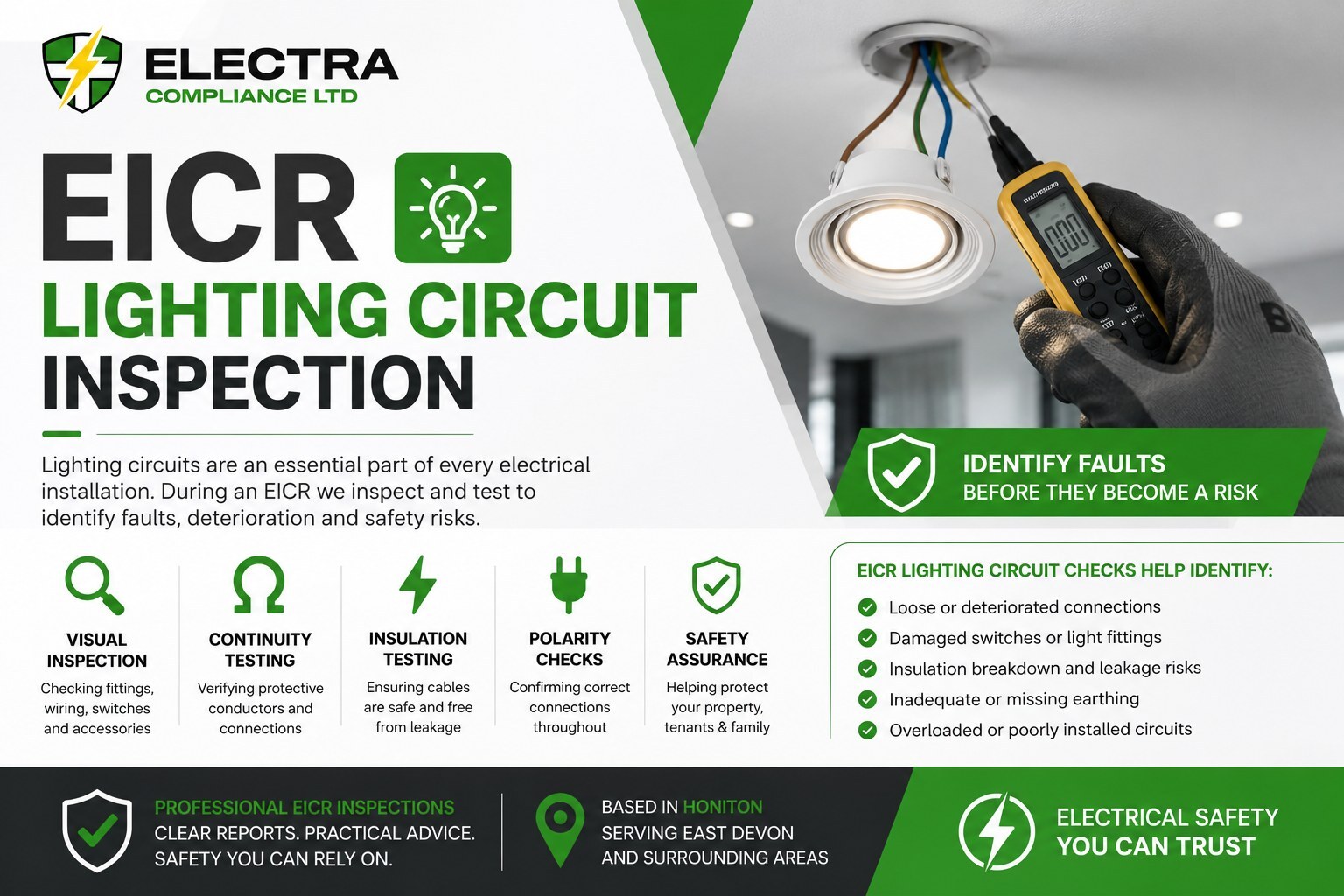
Lighting circuit EICR
Visual Inspection Of Lighting Circuits
Every EICR begins with a visual inspection of accessible components. During this stage, electricians assess visible lighting accessories, switch positions, ceiling roses, junction boxes, wiring methods and other accessible parts of the installation.
Signs of damage, overheating, poor workmanship or previous alterations may indicate underlying issues requiring further investigation. The condition of light fittings can often provide useful clues regarding the overall condition of the circuit.
Particular attention may be paid to older properties where original wiring systems remain in service. Some older installations may contain wiring methods or materials that no longer meet current standards or expectations.
Testing Lighting Circuit Continuity
One of the tests commonly performed during an EICR is continuity testing. This helps verify that conductors remain electrically connected throughout the circuit and that protective conductors are present where required.
Protective conductors play an important role in fault protection and electrical safety. If continuity is compromised, fault currents may not operate protective devices correctly during a fault condition.
Continuity testing helps identify damaged wiring, loose connections and other hidden faults that may not be visible during inspection alone.
Insulation Resistance Testing
Insulation resistance testing is used to assess the condition of cable insulation within the lighting circuit. Over time, insulation can deteriorate due to age, moisture, physical damage, excessive heat or environmental factors.
If insulation begins to break down, unwanted leakage currents may develop, increasing the risk of faults, nuisance tripping or electrical shock.
Testing helps determine whether the insulation remains in satisfactory condition and capable of providing safe operation under normal circumstances.
Lighting Circuit Polarity Checks
Correct polarity is essential for electrical safety. During an EICR, polarity testing helps confirm that conductors have been connected correctly throughout the circuit.
Incorrect polarity can result in electrical equipment appearing switched off while dangerous live parts remain energised. Although uncommon in modern installations, polarity faults can sometimes be discovered where alterations or repairs have been carried out incorrectly.
These checks form an important part of the overall inspection process and contribute to the safe operation of lighting systems throughout the property.
Light Switches And Switching Arrangements
Light switches are among the most frequently used electrical accessories within any building. During an EICR, accessible switches may be inspected for damage, secure mounting, overheating, cracking or signs of wear.
Loose connections behind switches can generate heat and potentially create fire risks if left unresolved. Older switches may also reveal evidence of historic alterations or DIY modifications that require further attention.
Where switching arrangements involve two-way or intermediate switching systems, the overall installation may be assessed to ensure safe and reliable operation.
LED Lighting And Modern Installations
Many properties have upgraded to LED lighting due to improved energy efficiency and reduced running costs. While LED systems are generally reliable, they still form part of the fixed electrical installation and may be considered during an EICR.
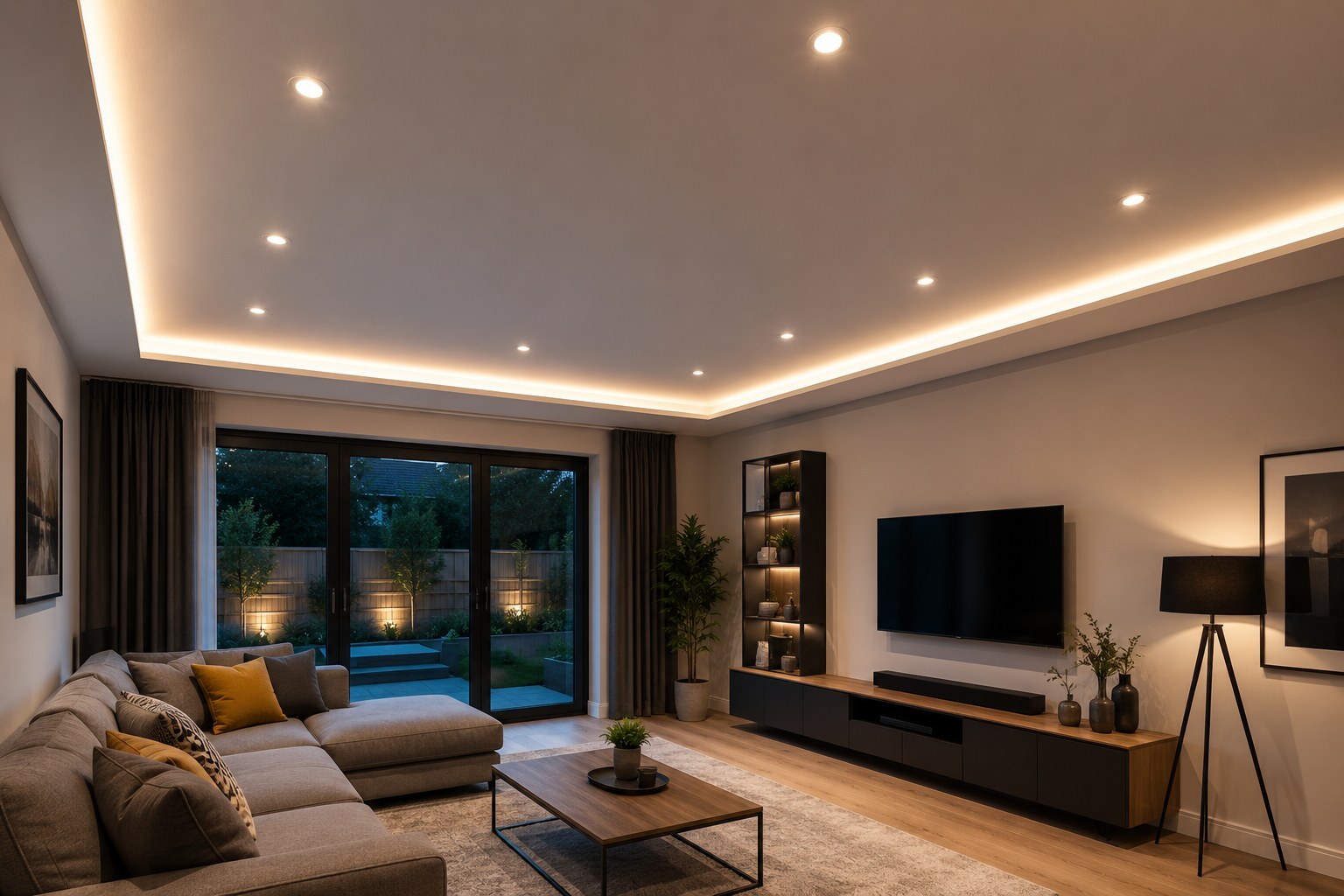
LED lighting EICR honiton devon
Issues can occasionally arise where unsuitable transformers, poorly installed drivers or incompatible dimmer switches have been fitted. Although the lighting itself may appear functional, the supporting electrical installation must still remain safe and compliant.
The increasing use of integrated LED systems has introduced new considerations for inspection and maintenance, particularly within modern residential properties.
External Lighting Circuits
External lighting systems can be particularly vulnerable to weather exposure and environmental conditions. Security lights, garden lighting, pathway lighting and decorative outdoor lighting may all be included within the scope of an EICR where accessible.
Inspectors may assess cable protection, enclosure integrity, weatherproof fittings and fault protection arrangements serving external circuits. Water ingress, UV exposure and physical damage can all affect the long-term reliability of outdoor electrical installations.
Regular inspection can help identify potential issues before they develop into electrical faults or safety concerns.
Common Lighting Circuit Defects Found During EICRs
Lighting circuit inspections frequently reveal issues that have developed gradually over time. Common observations may include loose connections, damaged accessories, inadequate earthing arrangements, deteriorated cable insulation, overheating, poor-quality alterations and incorrectly terminated conductors.
In some cases, defects may be relatively minor and easily corrected. In others, more significant issues may require remedial work to restore compliance and ensure the continued safety of the installation.
The purpose of the EICR is not to criticise previous work but to provide an objective assessment of the current condition of the electrical installation.
Lighting Circuits In Older Properties
Older homes throughout Honiton and East Devon often contain electrical installations that have evolved over several decades. Lighting circuits may have been extended, modified or repaired multiple times throughout the life of the property.
As electrical standards have changed, some older installations may no longer provide the same level of protection expected from modern systems. This does not automatically mean the installation is unsafe, but it may result in observations being recorded within the report.
EICRs help property owners understand the condition of these older systems and identify any improvements that may be beneficial.
Professional EICR Inspections In Honiton And East Devon
Electra Compliance provides professional Electrical Installation Condition Reports, electrical safety certificates and fault-finding services throughout Honiton, East Devon and surrounding areas.
Whether you are a homeowner, landlord, letting agent, property manager or business owner, an EICR provides valuable information about the condition of your electrical installation and helps identify potential issues before they become more serious.
By thoroughly inspecting lighting circuits alongside the wider electrical installation, Electra Compliance helps clients gain a clearer understanding of electrical safety, compliance and the long-term condition of their property’s electrical systems.
